
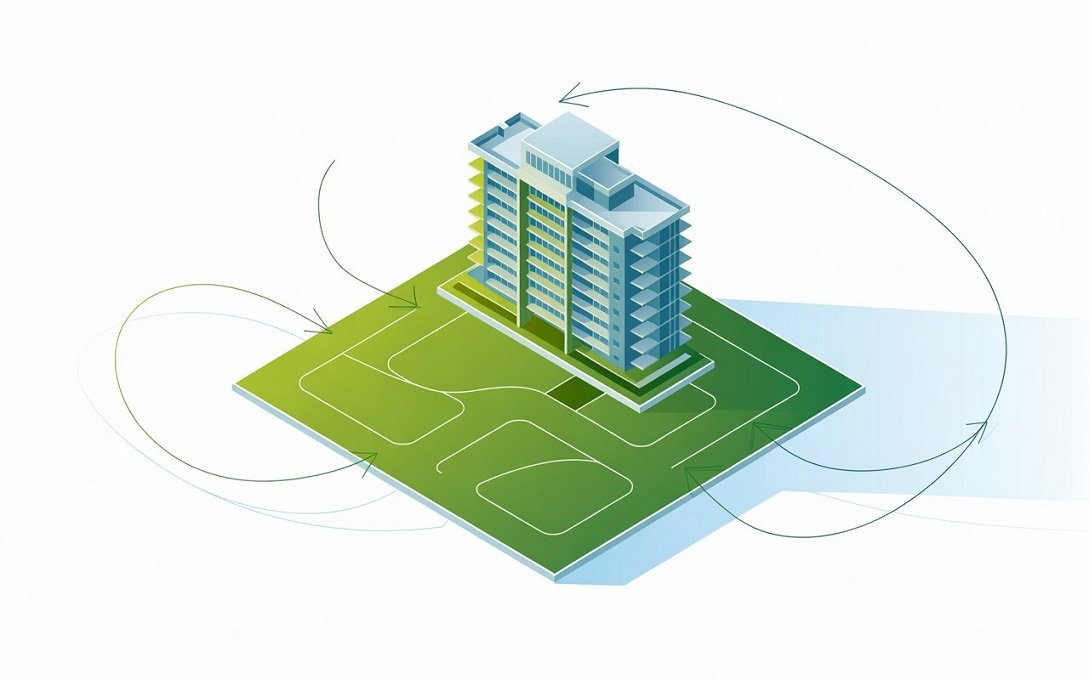
Understand UDS (Undivided Share of Land) in apartments—meaning, calculation formula, RERA rules, legal impact, resale value & FAQs. Read before buying a flat.
📘 What Is UDS (Undivided Share of Land)?
UDS (Undivided Share of Land) is the portion of land that legally belongs to you when you buy an apartment in a multi-storey building or gated community.
When you purchase a flat, you are not just buying the constructed home—you are also buying a proportionate share of the land on which the building stands. This land share is called undivided because:
-
It is jointly owned by all apartment owners
-
It cannot be physically divided or identified separately
-
Every owner holds a legal fraction of the total land
👉 Even if the building is demolished in the future, your land ownership remains intact through UDS.
🧠 Why Is UDS So Important in Real Estate?
Many buyers focus only on carpet area or price per sq.ft—but UDS determines your real ownership and long-term value.
🔑 Key Reasons UDS Matters
| Factor | Why It’s Important |
|---|---|
| Ownership Rights | Confirms your legal share of land |
| Redevelopment Value | Determines your share in future redevelopment |
| Resale Price | Higher UDS = higher property value |
| Loan Eligibility | Banks consider UDS for home loans |
| Legal Protection | Prevents ownership disputes |
| Inheritance | Can be passed to legal heirs |
🏢 UDS in Apartments & Flats Explained Simply
In apartment projects:
-
The total land area is divided among all flats
-
Allocation is based on the super built-up area of each flat
-
Larger flats get a higher UDS
-
Smaller flats get a lower UDS
📌 Simple Example
If:
-
Total land = 10,000 sq.ft
-
Total flats = 10 (equal size)
Each owner gets:
1,000 sq.ft UDS (10%)
All owners collectively own the entire land.
📐 How Is UDS Calculated? (With Formula & Example)
✅ Data Required
-
Total land area of the project
-
Super built-up area of your apartment
-
Total super built-up area of all apartments
🧮 UDS Calculation Formula
📊 Practical Calculation Example
| Details | Value |
|---|---|
| Total Land Area | 7,600 sq.ft |
| Total Apartment Area | 10,000 sq.ft |
| Your Apartment Size | 800 sq.ft |
Calculation:
✅ Your UDS = 608 sq.ft
⚖️ Legal Implications of UDS (Very Important)
1️⃣ Ownership Rights
Your sale deed must clearly mention UDS. This confirms your legal land ownership and protects you from future disputes.
2️⃣ Transfer & Resale
When you sell your apartment, the UDS automatically transfers to the buyer.
No UDS = weak resale value.
3️⃣ Redevelopment Rights
If the building goes for redevelopment:
-
Your UDS decides your entitlement
-
Higher UDS = better compensation or bigger new unit
4️⃣ Inheritance
UDS is heritable and passes on to legal heirs along with the apartment.
5️⃣ Home Loans & Mortgages
Banks and financial institutions:
-
Verify UDS before approving loans
-
Prefer properties with clearly documented UDS
🏦 Impact of UDS on Property Transactions
| Aspect | Impact |
|---|---|
| Transparency | Buyer knows exact land ownership |
| Property Valuation | Higher UDS boosts market value |
| Loan Approval | Easier financing |
| Legal Safety | Reduces disputes |
| Buyer Confidence | Increases trust in the project |
📜 UDS as per RERA Guidelines (India)
The Real Estate (Regulation and Development) Act, 2016 (RERA) protects buyers’ UDS rights.
🔍 Key RERA Rules on UDS
✔ Mandatory disclosure of UDS
✔ Transparent calculation method
✔ Mention of UDS in sale agreement
✔ Protection against misrepresentation
✔ Accountability of developers
👉 Always check RERA registration + UDS mention before buying.
🏷️ Selling an Undivided Share of Land (UDS)
Selling UDS usually happens along with apartment resale.
Key Points to Know:
-
Buyer becomes co-owner of land
-
Common areas are jointly owned
-
Legal registration is mandatory
-
Housing society approval may be required
🧾 Steps to Sell UDS
-
Verify legal documents
-
Get UDS valuation
-
Buyer agreement & clarity
-
Sale deed registration
-
Pay applicable stamp duty & taxes
✅ Advantages & ⚠️ Risks of UDS
👍 Advantages
-
Long-term land appreciation
-
Strong legal ownership
-
Better redevelopment benefits
-
Higher resale value
⚠️ Risks (If Ignored)
-
Low UDS reduces property value
-
Redevelopment disputes
-
Loan rejection
-
Legal ambiguity
❓ FAQs on UDS
1. What does UDS mean in apartments?
UDS means owning a proportionate share of the total land on which an apartment building is constructed.
2. Is UDS more important than carpet area?
Yes. Carpet area gives usability, but UDS gives ownership and long-term value.
3. Can I sell my UDS separately?
Generally no. UDS is sold along with the apartment unless legally structured otherwise.
4. Does higher UDS increase resale value?
Absolutely. Higher UDS means higher land ownership, which increases demand and price.
5. Is UDS mandatory under RERA?
Yes. RERA mandates transparent disclosure of UDS in sale agreements.
🏁 Conclusion: Why UDS Should Never Be Ignored
Undivided Share of Land is the foundation of apartment ownership.
While buildings may age, land never loses value.
Understanding UDS helps you:
-
Protect your legal rights
-
Maximize resale & redevelopment benefits
-
Make smarter long-term investments
Before buying any apartment, always verify UDS, RERA approval, and sale deed clarity.
📣 Call To Action
👉 Planning to Buy an Apartment?
Always check UDS, RERA registration, and land ownership details before signing.
📞 Need expert guidance on property verification or investment decisions? Contact us today.




Join The Discussion